CHoreographic statement
My choreographic process centers relationship and accessibility above all else. Building relationships with collaborators is essential, not just for producing interesting work, but for investing in trust and vulnerability; the very things that deepen and drive the work itself. I believe we are at our most creative when we are in safe, curious, and supportive relationships and spaces. These foundations allow more risk-taking, invite greater authenticity, and celebrate true collaboration.
I build these relational possibilities out of my training in Somatic Experiencing, which is a nervous system modality used to heal trauma but can also be translated into pedagogy, relationship-building, and creative somatic practice. By attuning to our own nervous systems, access needs and creative desires within the choreographic process, we cultivate true presence and a willingness to delve into rigor and detail. I am interested in drawing out individual movement patterns, creating group cohesion and encouraging translation that reveals the essence of a work. The movements or shapes do not have to be replicated or in unison, but the embodied understanding must come through. My work is known to also welcome flourish, camp, and excess — through costume, music choice, or character work, all derived from embodied research just the same.
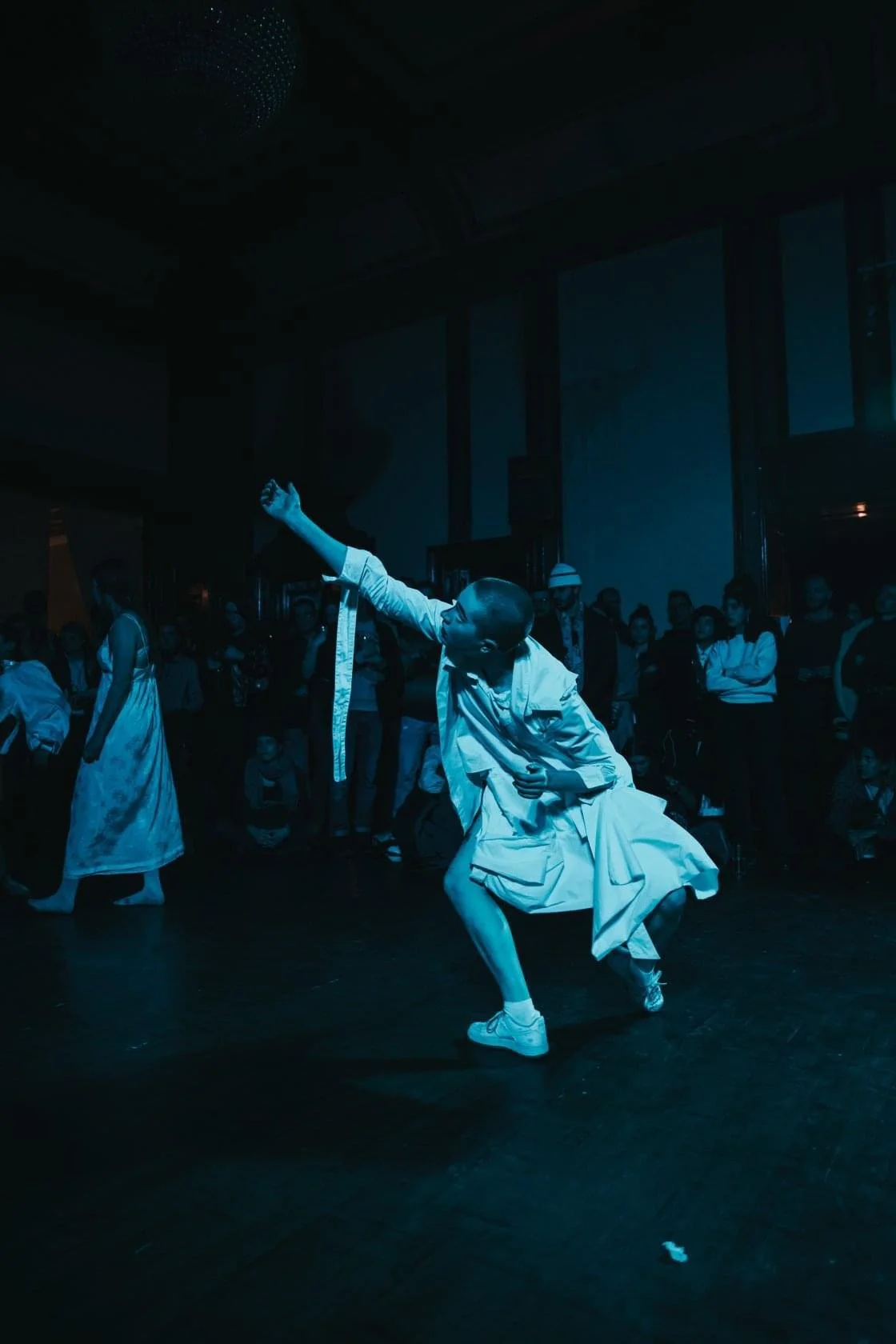
My work in a performance setting looks like individuals relating on stage, drawn to sensation and attuned to themselves, each other, and the space. I often work with live musicians as collaborators, who bring another layer of aliveness to my choreographic works. My work feels earnest, sometimes comical or confrontational; and is always focused on shifting the audience experience to be less voyeuristic and more connected to the interior of the performance. This can look like non-traditional seating and audience proximity, breaking the fourth wall, or finding alternatives to stages altogether. Right now I am playing with pushing my own creative edges into researching club culture, risky behavior, and more commercial movements — which have historically been outside of my training.